
Every beach cleanup turns up something unexpected. This season, one of our volunteers found a message in a bottle. It was sealed, weathered, and clearly written with great care. Let’s just say it wasn’t a love letter, and we won’t be reprinting it here.
It got a laugh from everyone on the beach that day. It also made a point we come back to every season: everything that washes up on our shores came from somewhere, and someone put it there.
A year of cleanups, by the numbers
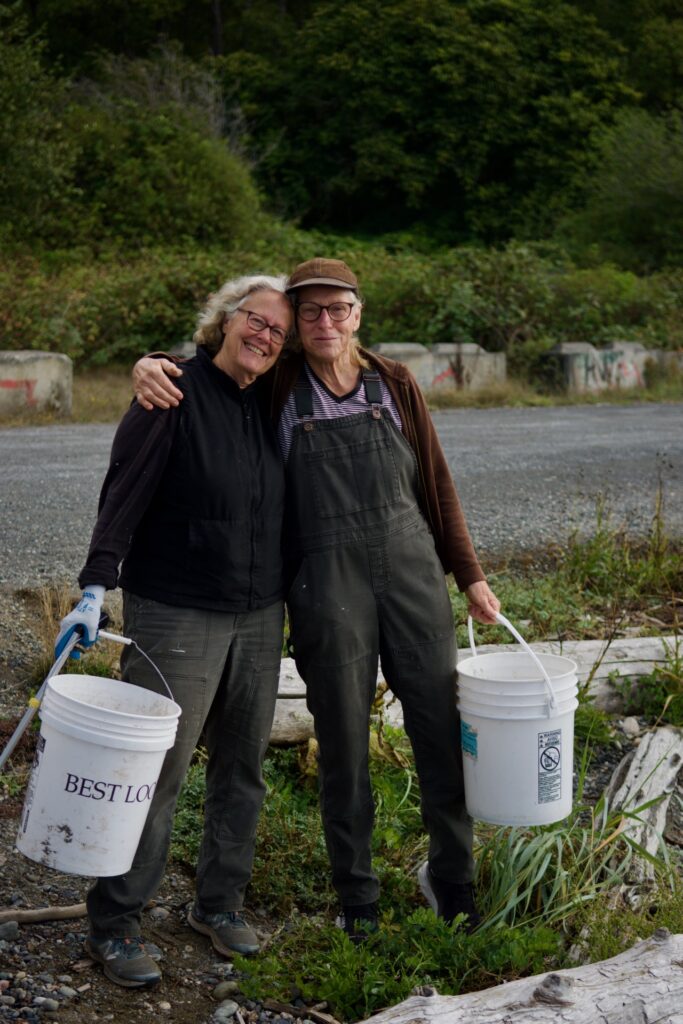
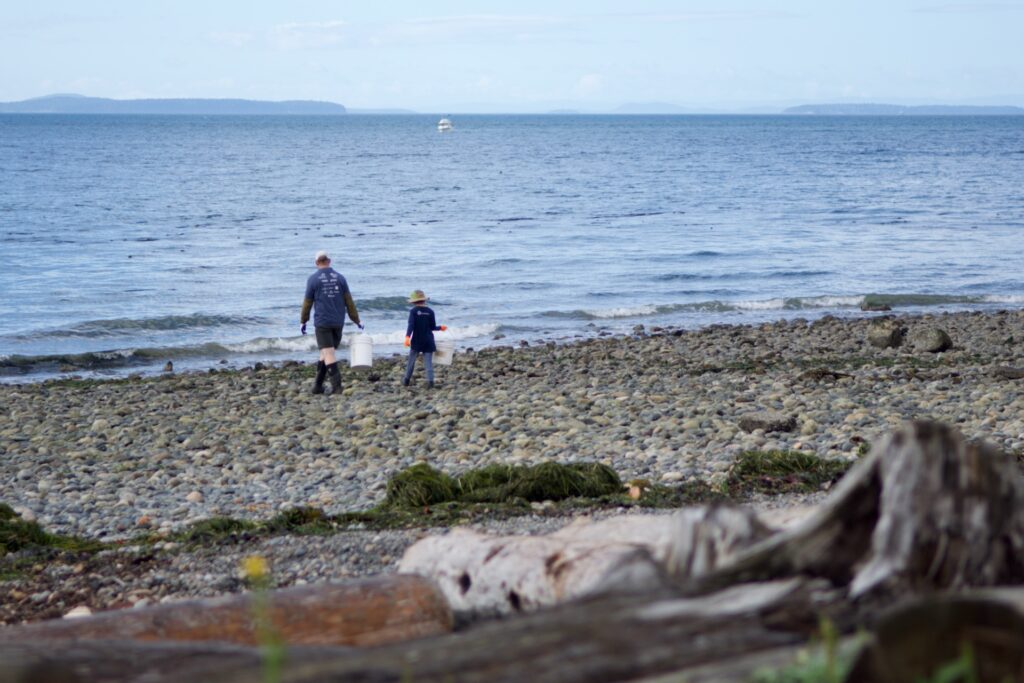
In 2026, 253 volunteers joined us for eight waterway cleanups, from Locust Beach to Cherry Point. Together, they removed 2,175 pounds of trash and recyclables from our shorelines.
Most of what we found wasn’t as memorable as a message in a bottle: cigarette butts, plastic bags, fishing nets. These everyday items add up fast, and each one is a piece of trash that won’t break down in the water or end up as microplastic in a fish’s stomach.
Thank you to every volunteer who spent a morning walking the tide line with a bucket.
What we can’t pick up
Cleanups catch what we can see. Much of the plastic in the Salish Sea is too small to grab or never reaches the beach at all. It is estimated that at least six tons of plastic dot Salish Sea shores at any given time: with greater magnitudes in the water.
That’s why picking up trash, while it matters, can’t be our only strategy. The most effective way to keep plastic out of the Salish Sea is to stop producing so much of it in the first place.
Stopping plastic at the source
In Bellingham in 2021, we helped pass a strong policy to cut single-use plastics city-wide—even stronger than state plastic rules. Bags and polystyrenes are among the most common items we find at beach cleanups.
We have brought that same energy to Olympia. Each legislative session, RE Sources pushes for statewide policies that reduce plastic pollution, such as the 2026 Bottle Bill to establish a refund for recycled bottles, and the 2026 Plastic Bag Bill to close loopholes and strengthen the 2020 single-use plastic bag ban.
Join our Legislative Action Team
State legislators pay attention when they hear from constituents, and the Legislative Action Team makes that easy. As a member of our team, you’ll get regular updates throughout the 2027 legislative session (January – April) on bills that protect the land, water, and climate, and be notified when you can take action.