
The 2026 Washington Legislative Session kicks off January 12th! Things will move quickly during this short, 60-day session, but you can rely on our policy staff to know what bills are going to committee, when to sign in “pro” or “con,” and when to contact your legislators. While prefiling has begun, we are still waiting to see most bills. In the meantime, here’s what we’re focusing on this year.
Reducing Waste & Plastic Pollution
- Our recycling system does not collect and recycle the majority of the 3.8 billion glass, plastic, and metal cans and bottles produced each year. This bill would establish a refund system for glass, plastic, and metal bottles, charging 10 cents per bottle upon purchase, and providing a 10 cent per bottle refund when returned to a designated recycling center. When recyclables are returned, people will have the option of receiving their refund as cash, donating it to charity, or putting it toward a college fund.
- The Recycling Reform Act, which passed in 2025, promotes extended producer responsibility (EPR) to shift the costs and burdens of recycling to producers rather than consumers. This will help with implementation of the Bottle Bill and ensure return centers are funded by beverage companies, not taxpayers. This bill will help address litter and plastic pollution and reduce greenhouse gas emissions by recycling more products.
Plastic Bag Bill (HB 2233/SB 5965)
- In 2020, Washington state passed a bill banning single-use plastic bags at grocery store checkouts. However, a loophole allowed them to still sell thicker “reusable” plastic bags. This bill would ban all plastic film bags, raise the price of paper bags from 8 cents to 20 cents, and ensure delivery service and distributors comply with the law.

-565k metric tons
Reduction in CO2 emissions thanks to the Recycling Reform Act
Forest Management & Funding
DNR Agency Requests on Forest Health and Revenue Directives (HB 2170/SB 5999)
- The Department of Natural Resources (DNR), led by Commissioner of Public Lands Dave Upthegrove, is planning to ask the legislature to allow more flexibility in how it generates revenue for the State Trust. Some key items include:
- The ability to use carbon markets to sell offset credits as an alternative revenue stream for State Trust lands. (Currently, the agency is limited to leasing carbon credits at a much lower return rate.)
- Exploring additional market-based solutions based on the value of other non-carbon ecosystem services, such as biodiversity credits or “avoided wildfire emissions” credits.
- We recognize that market-based solutions and carbon markets aren’t everyone’s cup of tea. However, Commissioner Upthegrove’s message that interim solutions are needed to fulfill the agency’s obligations to State Trust beneficiaries while longer term solutions and legislative changes are pursued is also valid. Securing more enduring outcomes will take significant policy shifts—which take time. Inserting non-timber management objectives into the agency’s decade-long “Sustainable Harvest Calculation” (SHC), and fully funding public schools and other essential county services through the state operating budget (rather than volatile resource extraction markets) are two examples of this. We commend agency leadership for taking some initial steps toward these bigger milestones.
CCA Funding for Forest Climate Resilience
- Since 2023, funding from the Climate Commitment Act’s Natural Climate Solutions (NCS) account has supported the conservation of older, structurally complex forests on state lands. These forests have an unmatched ability to sequester carbon and buffer communities against the worst of climate impacts like drought, flooding, and wildfire. Continuing this funding is incredibly important for our communities and climate.
- This year, we hope to see additional opportunities to use this fund to enhance management of public forests for climate resilience. One such example is using ecological forestry tools like Variable Density Thinning (VDT) to increase structural and age diversity on state forests (rather than intensive cutting). Projects like these are an important first step in helping the DNR pilot and scale a management approach that prioritizes climate resilience as well as timber production.
Wildfire Response Funding
- Supporting a coalition effort led by The Nature Conservancy and Confederated Tribes of the Colville Reservation to request full funding of the $125 million promised by the legislature for the 2025-2027 biennium via HB 1168 in 2021.
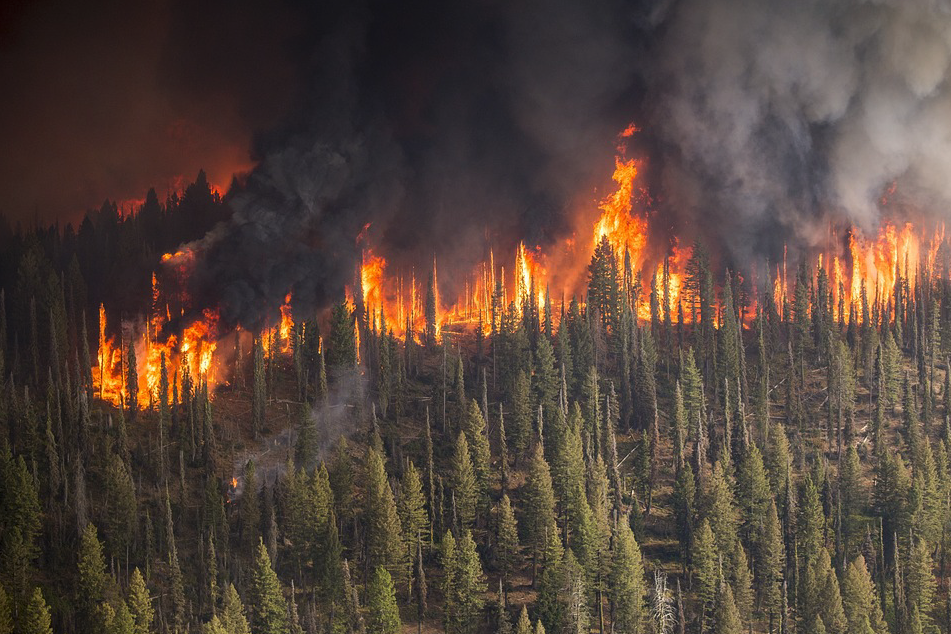
- In the 2025 legislative session, only $60 million was allocated to the Wildfire Response, Forest Restoration, and Community Resilience Account for the biennium budget. This fell significantly short of the original commitment at a time where state-funded wildfire and forest health work is essential to holding the line on climate resilience and coordinated emergency response for our region.
48%
Of wildfire response funding allocated in 2025 compared to what was initially promised.
Biosolid Management
Eliminating Washington’s “Beneficial Use” clause
- Washington’s “Beneficial Use” clause mandates a municipality’s sewage sludge is “reused as a beneficial commodity.” While this was intended to promote using treated sewage sludge—or biosolids—as a fertilizer for agricultural and forestry purposes, it was written before we had a full understanding of the harmful contaminants in our waste water. The most concerning of these is PFAS, often referred to as “forever chemicals,” which are known to cause harm to humans. PFAS are a component of many every-day items, which is how they often end up in our sewer systems, yet are not broken down by the digestion process that turns sewage sludge into biosolids.
- Because of the “Beneficial Use” clause, we have limited options for what we can do with biosolids, many of which pose a threat to human health and water quality. By eliminating the mandate, biosolids can be dealt with in more ways that do not pose risk to the public or environment.
Proper labeling of commercially sold biosolids
- Currently, there is no requirement to label store-bought compost that contains biosolids created from sewage sludge. The wastewater digestion process that turns sewage sludge into compost does not break down harmful chemicals such as PFAS, pharmaceuticals, metals, and flame retardants. When compost containing such contaminants is mixed into the ground or used in gardens, it poses a risk to humans, our drinking water, and our ecosystems. Sewage-derived compost should be clearly labeled to minimize these impacts.
Unfortunately, neither of these issues have been pushed by advocacy coalitions or taken up by legislators, and thus unlikely to go anywhere this session. However, educating people on these topics is an important part of the policy process to increase public awareness and push for change on emerging issues.
Energy Efficiency, Affordability & Resilience
This winter’s legislative session will be happening when temperatures are lowest and energy demand is highest, underlining the rapidly rising demand for clean power in the Northwest. As bills are introduced in the coming weeks, we want to see dynamic policymaking and innovative measures that:
- Improve access to affordable energy, heating, and cooling for residential utility customers, particularly renters
- Scale-up home weatherization projects for efficiency, cost savings and climate resilience
- Maintain our course to ensure that Washington’s electricity is net-zero carbon by 2030
- Expand transmission capacity and accelerate grid modernization, without compromising environmental protection
We’ll be updating this page as the session progresses. Sign up for our Legislative Action Team emails to receive updates and be notified when you can take action!