
Every time it rains, water picks up fossil fuels, dirt, metals, poop, and other contaminants and ultimately delivers it to the Salish Sea. This contaminated water is called stormwater and is the largest source of pollution to the Salish Sea. In large cities like Seattle or Spokane, permits require some stormwater to be monitored but in smaller cities like Bellingham, Anacortes, and even Olympia, there are no requirements to monitor stormwater.
In true RE Sources fashion, we recognized this knowledge gap, and starting at the end of 2020 worked to address it. We began small with one or two staff members going out to Bellingham Bay to collect stormwater data. Coincidentally, around the same time folks from the Friends of the Salish Sea also began monitoring stormwater in Anacortes. In both cities, in addition to collecting critical data, relationships were forged with the respective city’s stormwater manager. Communication was key in conducting follow up surveys and fine tuning the methodology of the programs.
Fast forward two years: Trends at specific monitoring sites began to show. In Bellingham, we saw consistently high bacteria levels at Bennett outfall (the old beehive-looking structure near Taylor Dock), which happens to be a popular swimming area. By this time, both programs had dreams of expanding, not only in their own cities, but to other similar sized cities.
So, in 2023, we decided to join forces and create a community science monitoring program. The program was aptly re-named the Salish Sea Stormwater Monitoring Project. Together, RE Sources and Friends of Salish Sea worked to unify their procedures, materials, and data storage and maintenance, as well as develop a recruitment and training program for volunteer monitors.
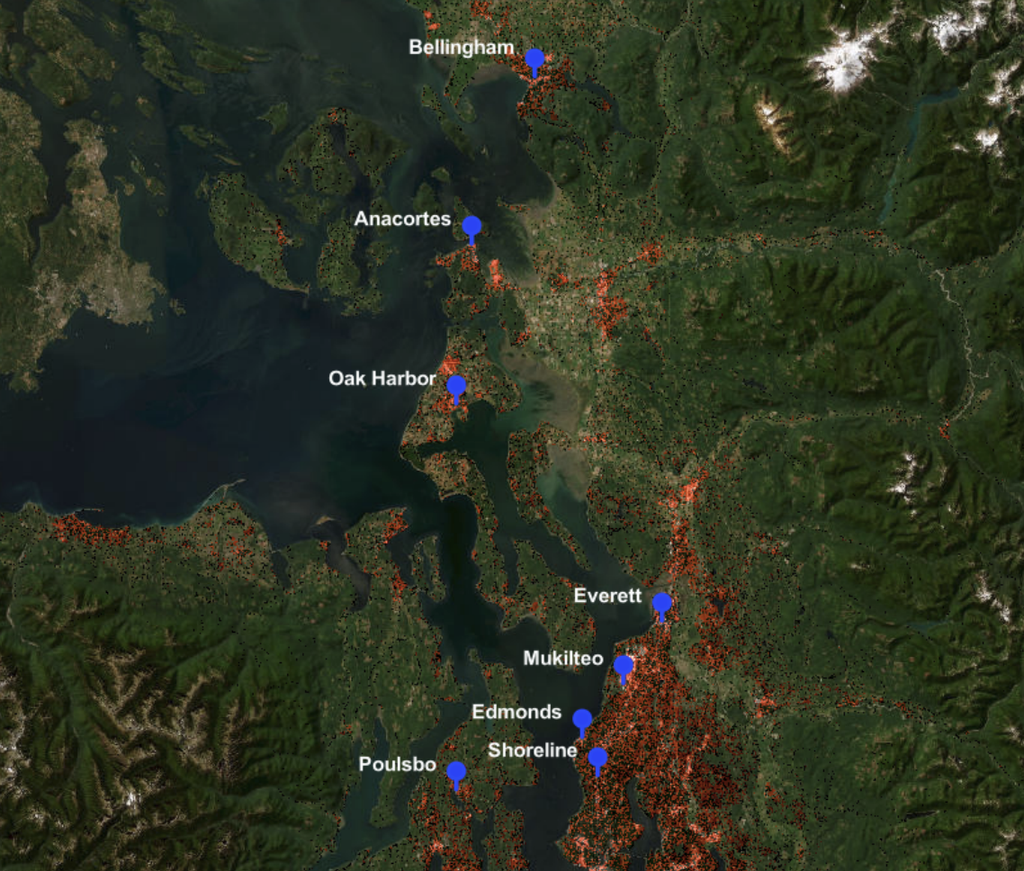
Since 2023, the Salish Sea Stormwater Monitoring Program has grown from two cities to nine: Bellingham, Anacortes, Oak Harbor, Everett, Mukilteo, Edmonds, Shoreline, Poulsbo, and Olympia. Additionally, the program has grown from just a few staff members and volunteers collecting data to more than 90 trained volunteers collecting data at 88 sites (68 outfalls and 20 urban creeks). Our volunteers are what make this program run. We are incredibly grateful for their stewardship, dedication, and efforts to collect stormwater data no matter the weather or time of day (or night).
Fast forwarding another three years: We have five years of stormwater data. Monthly monitoring tracks water temperature, dissolved oxygen, conductivity, salinity, pH, turbidity, and E. coli, or fecal bacteria, and observes flow rate, color, odor, and other visual indicators. We’ve spent the past year analyzing and learning from the stormwater data collected at each city to create an extensive five-year report. You can check it out here!
In the report, we rated every outfall and stream’s overall water quality health as Good, Watch, or Threat. This was based on the frequency of exceedances of stormwater thresholds (outfalls) or water quality standards (streams). Of the 88 sites, six were rated Good, 47 were rated Watch, and 35 were rated Threat. E. coli bacteria is the parameter with the most frequent exceedance rate in five of eight cities, followed by dissolved oxygen and temperature.
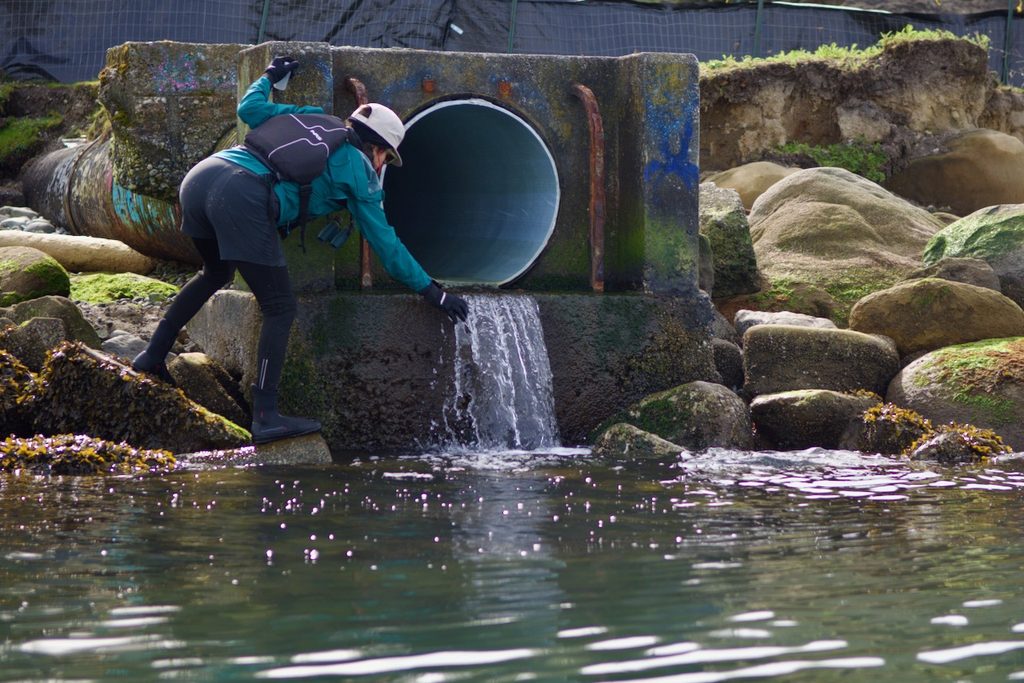
Our monitoring results directly informed several successful pollution source investigations in partnership with stormwater managers. In several locations, sources of bacteria pollution were found and fixed, making local waters healthier and safer. The monitoring program has shown that pollution enters the Salish Sea on a daily basis even when a city is seemingly compliant with their stormwater permits. If it weren’t for this site-specific monitoring program, these pollution sources would have gone undetected.
The Salish Sea Stormwater Monitoring Program has proven to be a successful, low-cost, volunteer-based monitoring model that can generate critical, and otherwise uncollected, data that supports pollution source tracing, leads to corrective actions, and measurably reduces stormwater pollution. Perhaps most importantly, it is an effective strategy for engaging community members in learning about — and helping protect — their local environment.
Fast forward into the future: What could the Salish Sea Stormwater Monitoring Program look like? And what does it need to get there? Finding more reliable and long-term funding sources will enable this program to thrive. We want to see other communities start a stormwater monitoring program and expand the number of cities that we currently monitor. We envision digital, up-to-date results that are available to the public in an easy to digest manner. And lastly, we hope to continue to be part of the solution to reducing stormwater pollution by engaging with the public, permit writers, and regulators.